How Play-Based Peace-Building Is Transforming Children's Lives in Afghanistan
A story of 14 facilitators, two cities, and one shared journey toward peace-building from the inside out.
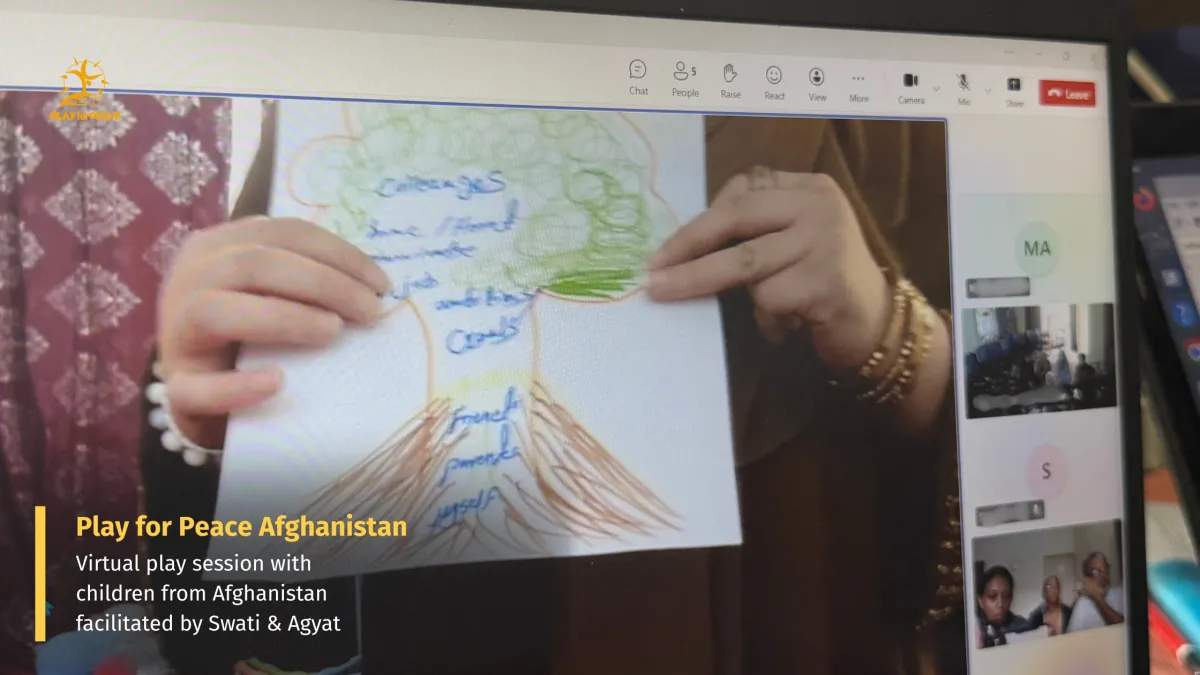
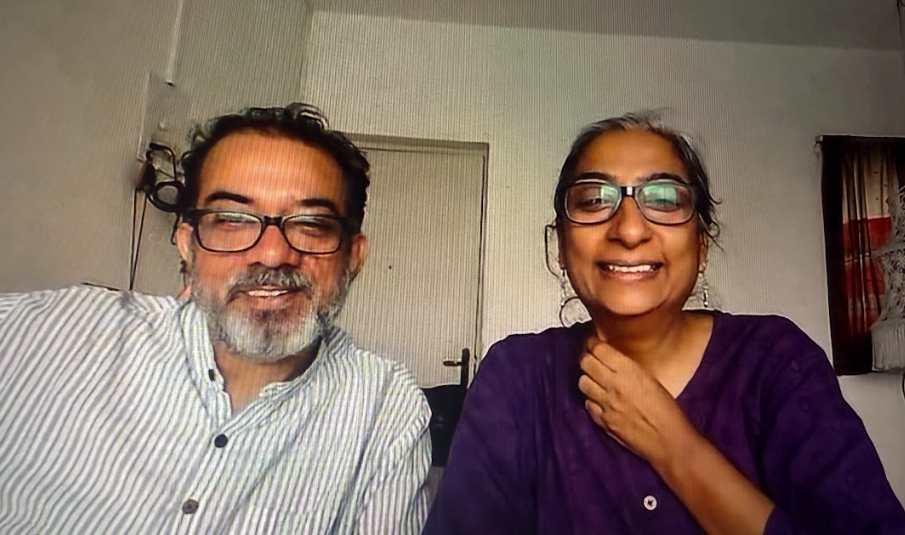
In 2025, across the cities of Kabul and Herat, 14 facilitators from Jesuit Refugee Service (JRS) completed a landmark play-based peacebuilding program with Play for Peace. Trained by Certified Trainers Swati and Agyat, they journeyed through 12 months and 12 modules, woven together under three deeply human themes: Live Laughter, Practice Compassion, and Spread Peace. Working alongside 100+ volunteers and emerging facilitators, their growing circle of care ultimately reached nearly 5,500 children and youth.
This was not training in the traditional sense. It was a collective journey of unlearning and relearning, of stepping out of the role of instructor and into that of a fellow human being. And it required a particular kind of courage: the courage to laugh with a child who has seen too much, to sit in a circle and ask a hard question, to cry together, and then keep going.
What the Final Celebration Revealed
The final module was Celebration: a genuine, heartfelt gathering where facilitators and volunteers reflected on who they had been at the beginning, and who they had become.
In the recording of that session, you don't see polished presentations or rehearsed speeches. You see real people, moved by the weight of what they have lived together.
You hear a facilitator say, quietly and with deep conviction:
"Practicing those core values is like practicing peace between/with ourselves."
Peace does not begin on a stage or in a policy document. It begins in the space between people, in the willingness to give and receive honest feedback, and to hold one another accountable with love.
Another voice reflects:
"It's not personal anymore. It's not me telling, your activity is wrong. I'm telling, look, it's not fitting in the core values."
This shift, from personal critique to values-based dialogue, is not a small thing. In a context as complex and emotionally layered as Afghanistan, learning to distinguish between the person and the practice is an act of profound peace.
How Facilitators Transformed Their Approach to Play-Based Learning
Among the most remarkable stories from this year is the transformation of the "A group," a cohort of facilitators who initially required constant external guidance just to manage their sessions.
By the final module, they needed none of it. They had become autonomous leaders, designing, facilitating, and reflecting on their work entirely on their own terms. The turning point came when they stopped explaining the modules and started playing them. When they moved from the front of the room to the circle. When they became participants themselves.
That shift unlocked something. The activities were no longer abstract instructions. They were real, embodied experiences. And the children felt the difference.
How Cooperative Play Helped Children Process Trauma
Yes, the games brought joy. Children laughed, ran, played, and connected. But the play also opened something deeper. Facilitators described "crying moments," times when a game or a reflection activity cracked open a memory or a grief that had been quietly carried.
Children began to speak about what they had lived through. Adolescents found, perhaps for the first time, a safe space to feel sad without judgment. This is the heart of play-based peacebuilding: it does not bypass emotion, it creates the conditions for it.
As one facilitator put it:
"I felt proud of myself. I recall the joy and laughter of children… I felt proud and joy as well as happy."
They had entered the year simply "spending time." They left it understanding that they had built something: resilience, adaptability, and the capacity to hold space for both laughter and sadness, sometimes in the same afternoon.
Building a Peacebuilding Community Across Kabul and Herat
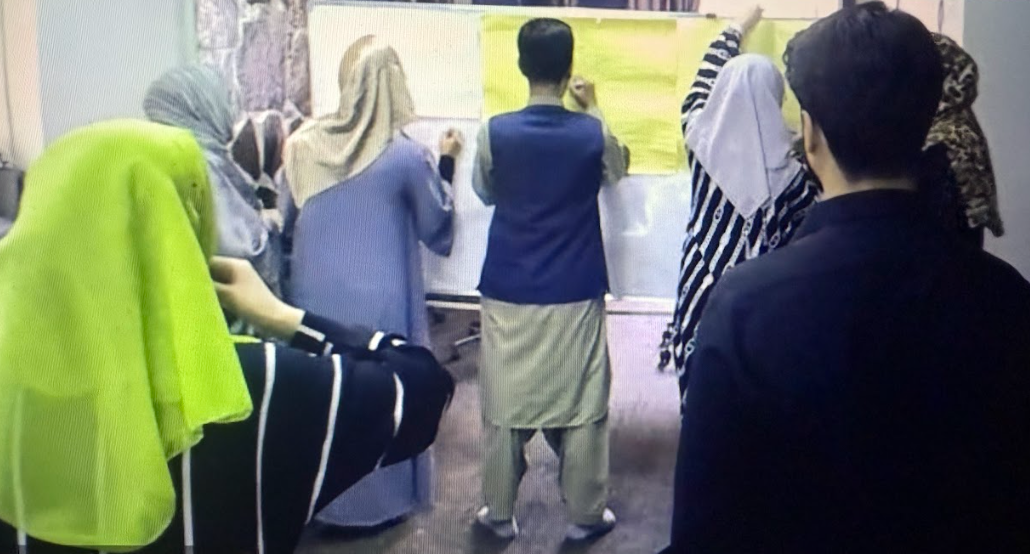
At the start of the year, the Kabul team and the Herat team were cordial but separate. By the end, they were a support system.
They learned to challenge each other's session designs, asking hard questions about competitive elements, about rules that might exclude a child, about whether every activity truly aligned with the program's core values. These questions, which might once have felt like criticism, became expressions of care. What began as two regional groups became one community spanning hundreds of kilometers, united by a shared commitment to children, to peace, and to one another.
Every single facilitator reported witnessing lasting positive change in the young people they worked with. Children who had once been withdrawn began to engage. The behaviors learned in the circle (inclusion, cooperation, emotional awareness) began to ripple outward into families and neighborhoods. Community members who had watched from a distance began to step forward, to join, to ask how they could help.
A Global Journey, Rooted in Local Wisdom
In the final session, one voice offered a perspective that reframes the entire year:
"Whatever you did last 3 years… it's going to be used by all clubs in 22 countries. So your journey is a global journey."
The 14 facilitators in Kabul and Herat were not only serving their communities. They were contributing to a living, global curriculum shaped by practitioners in dozens of countries, each bringing their own wisdom and understanding of what it means to build peace with children. Building on this growth, the most committed facilitators have now begun a Certified Trainer Pathway, carrying this work forward as teachers and mentors in their own right.
There is a child in Kabul right now who laughed today during a game. Who felt, for a moment, safe enough to cry. Who looked around a circle and saw people who would not leave her out.
It took 14 facilitators, two cities, 12 months, and years of collective learning to create the conditions for that moment. And it was worth every step.
The Play for Peace Afghanistan project is implemented in partnership with Jesuit Refugee Service (JRS). We are grateful to every facilitator, volunteer, child, and community member who made this journey possible.
To learn more about Play for Peace and the global community of peace-builders shaping this work across dozens of countries, visit playforpeace.org.