AEE APAC THAILAND 2026
We almost did not have the vocabulary for it until we started preparing for Bangkok.
The masterclass was set. The conference session was booked. And somewhere in the weeks of thinking that preceded both, something came into focus that we had been circling for a long time without quite naming it: micro-justice.
Once we had the word, everything else made sense.
The Room in Bangkok
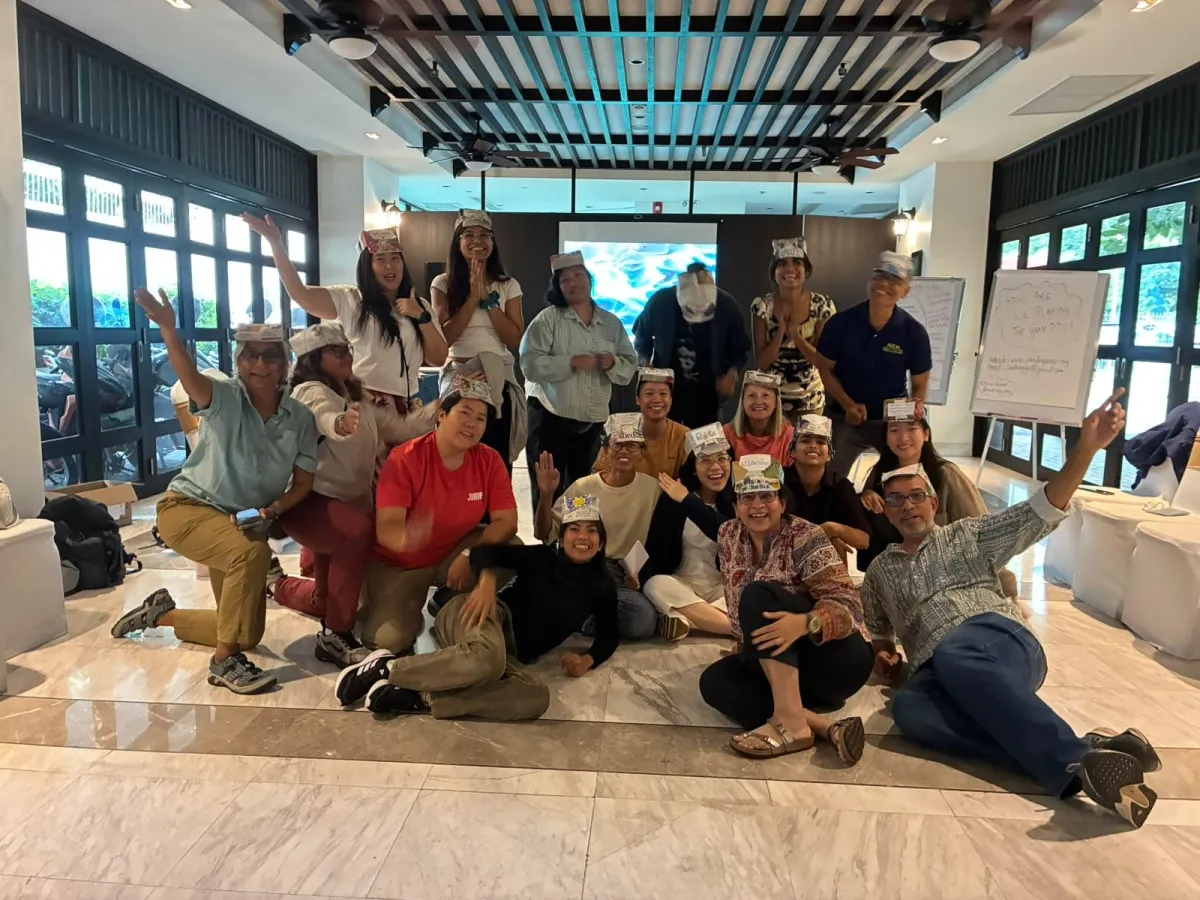
The Play for Peace® masterclass at the AEE APAC conference in Thailand brought together 16 participants, most of them young freelancers connected to Jump! Foundation, also the conference host that believed in their potential enough to sponsor their tickets to be there. There was also a representative from UNICEF, Chotirot Suksangvoravong (Dear), who later deeply reflect on his experience that offers one of the most honest glimpses we have seen into what an immersive day with Play for Peace® actually unfolds for a person.
The group was young. Curious. And from the first hour, genuinely engaged.
But what we want to talk about is not just what happened in the room. It is what we arrived at while preparing for it, because that preparation changed how we understand everything Play for Peace® does.
Micro-Justice and the 3C Frame
The conversation that became the most important thread of the whole Bangkok experience started with Sinthuja.
She had been thinking about play as resistance for the India conference, and when she used the term micro-justice and shared her reflection around that idea, it landed immediately. We connected it to something we have long called 3C: consistent, continuous contact. The practice of showing up, again and again, in the same space as another person. Not once. Not when it is convenient. Consistently. Continuously. In contact.
Here is the thread we found:
Play, the Play for Peace® kind, invites. It offers choice. It gives agency. It gives hope. And in doing that, it makes people ready to resist and to create.
That sequence is now how we understand the work. Play as invitation. Agency as hope. Hope as the beginning of resistance and creation. Resistance and creation are two sides of the same coin. And underneath all of it, 3C: the consistent, continuous contact that makes the whole sequence possible in the first place.
Micro-justice is not a grand gesture. It is what happens when a facilitator shows up for the fifty-third time to the same circle of children in a refugee camp. It is what happens when a game makes a child feel safe enough to sit with someone their community told them to fear. It is small. It is continuous. And it is, we believe, how peace is actually built.
This frame is helping us understand the stories of Imroz, Javeed, Sahil, Arzoo, and so many others. We will be using this vocabulary much more.
What Madhavi Resonated with by the End of the Day
Madhavi is a curriculum specialist and a close friend. She has been part of small Play for Peace® sessions before, but Bangkok was a different scale of exposure entirely.
She came in skeptical. Her concern was specific: she finds high-energy, adrenaline-driven facilitation exhausting and alienating. She was not sure she would find a place in a full day of cooperative play.
By the first hour, she was excited. By the end of the day, she said it simply: now I understand.
What she understood was this: facilitation can be a quiet exercise. You do not have to perform energy at a room to hold it well. Activities land when they are designed to meet people where they are, not where you need them to be. She saw how the community-building model unfolds across a session, and why different activities serve different moments in that arc.
What Swati found herself naming was the trauma-informed quality of the process: it let Madhavi embrace the day entirely at her own pace. She was never pushed to the center before she was ready. The space was designed so she could choose her own level of engagement throughout. That is not a small thing for someone whose primary concern was whether she would feel overwhelmed. The design held her.
That is what trauma-informed facilitation actually looks like in practice. Not a clinical framework applied from the outside, but a way of designing a session so that the person most hesitant to be there discovers, on their own terms, that they are safe.
What Maurie Heard in the Conference Session
At the AEE APAC conference itself, we had a 90-minute session. Maurie Lang joined us for it.
At one point we said something that we have believed for a long time: a child sitting in the room not playing is still participating.
Maurie acknowledged it immediately. She named the trauma-informed lens we were working with, and she heard what that sentence means: we do not measure presence by volume or visible engagement. We measure it by who felt safe enough to stay in the room at all. Sitting quietly in a circle while everyone else plays is an act of courage for some children. It deserves to be recognized as participation, not corrected into something louder.
A diverse group of people came up afterward and said they were interested. That in their own time they would go deeper, and would likely find their way to Play for Peace®. That is exactly how this work travels: not through campaigns or pressure, but through one honest session that gives someone a glimpse of something real, and trusts them to follow it in their own time.
A Vocabulary We Will Keep Using
Bangkok gave us something to carry forward.
Micro-justice. 3C. Play as invitation, choice, agency, hope, resistance, creation. These are not new ideas for us, exactly. But they are newly named. And having the language to say clearly what we have been watching happen, in circles and camps and classrooms and conference rooms, changes what we can offer next.
We came to Bangkok to run a masterclass. We left with a frame for the work that will shape how we talk about it for a long time.
That is the kind of day Bangkok was.
Inspired by this story? Explore more from our global community at playforpeace.org/stories — or support this work with a gift at playforpeace.org/donate.
Swati Bhatt and Agyat Mitra are Play for Peace® trainers and facilitators. Their work spans experiential education, trauma-informed practice, and cooperative play across Asia and beyond.